
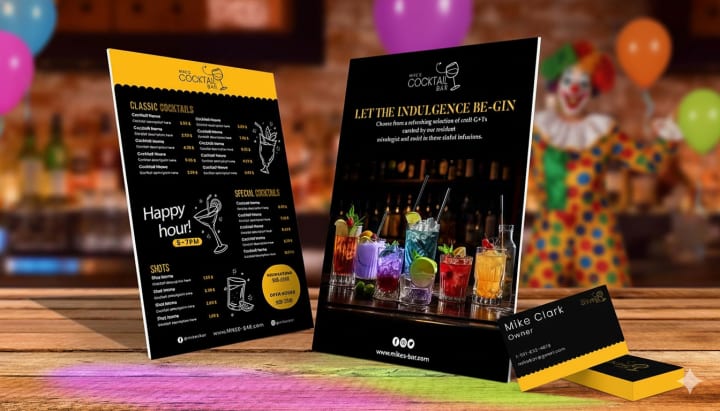
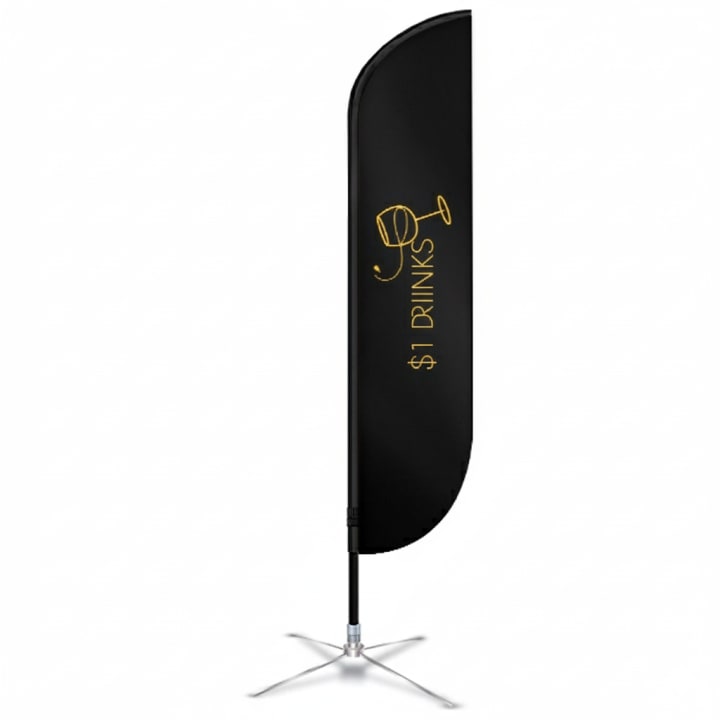
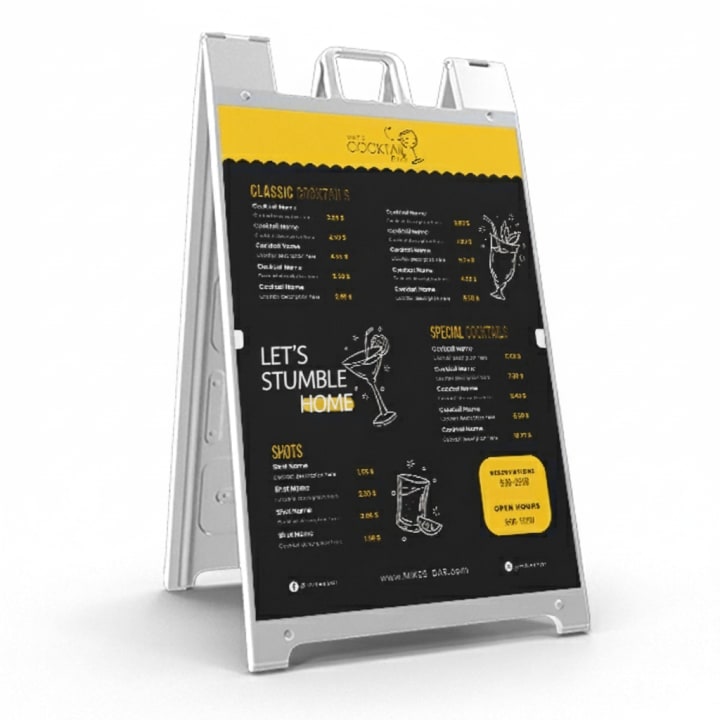
The story Five matching signs turned out to have five different jobs

A hypothetical taproom renovation begins with a request for “five matching bar signs.” A short walk through the plan shows five different decisions: recognizing the entrance from the parking approach, understanding the ordering point, finding pickup, locating the patio, and reading a rotating feature list.

The owner labels those positions ENTRY, ORDER, PICKUP, PATIO, and FEATURE. Each receives a photograph, measured boundary, approach arrow, typical reading distance, and message owner. ENTRY and PATIO need stable information. FEATURE changes frequently. PICKUP must remain clear when a line forms. Matching colors alone would not solve those different jobs.

The content table separates locked brand elements from operational wording and variable text. The venue manager approves current guest information; the property contact confirms placement. Any required notice stays under the control of the responsible owner or reviewer rather than being drafted from memory by the fabricator.

Construction is discussed after the map is complete. Exposure, glare, cleaning, support points, change frequency, and viewing sides now give the quote a real basis. The final proof package can be checked by location code, preventing a decorative panel from quietly becoming an unreadable menu or a directional sign from pointing the wrong way.

Quick answer

Direct answer: Custom bar signs can identify the venue, display a menu or give a special offer its own space. We help match the message to where it will be read, whether that is a reception wall, ordering counter or storefront. Send the wording, branding and a photo of the area to start.

Key takeaways

  • A permanent venue mark and a weekly menu do not belong in the same update strategy, even when they share a visual system.
  • Two-sided visibility depends on traffic flow, suspension or support, artwork orientation, and a construction approved for that placement.
  • Venue owners remain responsible for approved pricing, hours, service information, safety messaging, alcohol-related notices, and required disclosures.

Specs & options

Specs

Location code
A unique name for each destination, matched to a photograph and floor-plan or path reference.
Primary decision
The one question the guest should answer after seeing that sign at that location.
Controlled message
Exact approved wording, logo version, prices or dates, and the person authorized to revise them.
Viewing condition
Approach direction, reading distance, dwell time, lighting, glare, crowding, and whether both sides are visible.
Physical context
Measured area, wall or support condition, nearby fixtures, cleaning activity, exposure, and attachment constraints.
Change cadence
Whether information is intended to remain stable, rotate seasonally, or be replaced during routine operations.
Approval ownership
Brand, venue-operations, property, and regulatory reviewers identified for the content they control.
Quote record
Finished dimensions, construction, surface appearance, sides, mounting interface, quantity, and schedule confirmed per location.

Options

  • Create a durable identity layer and a separately replaceable information layer when part of the message changes often.
  • Use one-sided, two-sided, wall-facing, counter-facing, or suspended concepts according to documented guest movement.
  • Compare subdued, reflective, transparent, opaque, dimensional, or illuminated visual goals without assuming every construction is offered.
  • Ask for a quote-confirmed substrate and finish after indoor exposure, patio weather, heat, glare, cleaning, and handling are disclosed.
  • Coordinate entry, menu, service, and directional pieces with shared typography or color while preserving each message hierarchy.
  • For temporary promotions, make the activation and removal dates part of the approval record instead of relying on staff memory.

Need help preparing files? See Artwork Setup.

Good fit for

  • Venue identification with an approach-specific name, logo, and entrance cue.
  • Menu or feature displays designed around who updates the content and how often.
  • Ordering, pickup, restroom, patio, and staff-area directions tied to actual decision points.
  • Hours, event, or promotional messages with an owner-controlled start, revision, and removal date.
  • Decorative brand pieces that add atmosphere without competing with operational information.
  • Personalized home-bar signs using owner-approved names, sayings, dates, or artwork.

How it works

  1. 1) Walk the decision path

    List each point where a guest needs identification, ordering information, direction, pickup guidance, or another response. Give every point a location code.

  2. 2) Assign message custody

    Separate permanent brand content from changing operational details and required notices; name the person who approves each category.

  3. 3) Capture the venue conditions

    Photograph and measure every destination, then record approach, sightline, light, glare, exposure, cleaning, support, and attachment constraints.

  4. 4) Compare the sign family

    Review hierarchy, typography, color, changeable areas, viewing sides, and proposed construction location by location rather than approving one generic sample.

  5. 5) Release by location code

    Confirm wording, dimensions, quantities, artwork version, installation responsibility, schedule, and quote details for each named sign before production.

FAQ

Which custom bar sign should I plan first?

Start at the earliest unresolved guest decision. If people cannot identify the entrance, prioritize arrival. If they enter but do not know where or how to order, map that point next. A decorative feature can follow once identification, ordering, pickup, and directional needs are clear.

What information should I send for a bar-sign quote?

Send one row per proposed sign with its location code, purpose, final or draft text, artwork, measured boundary, photographs, reading distance, approach direction, lighting, exposure, viewing sides, change frequency, desired date, quantity, and person approving the artwork. Mark unresolved items openly.

How should a frequently changing menu be handled?

Tell Sactown Signco who updates it, how often content changes, what portion stays fixed, how much information appears at once, and how close guests stand while reading. Ask which supported changeable approach fits those facts. Do not lock volatile prices or items into a permanent layer by accident.

Can a custom sign go on an outdoor bar or patio?

Outdoor placement requires a condition-specific review. Document sun direction, rain exposure, wind, heat, irrigation, cleaning, support, viewing distance, and property requirements. The quote should identify the approved construction and mounting details; “outdoor” alone is not a durability specification.

What material is best for a custom bar sign?

There is no single best substrate for every venue. The choice follows placement, span, support, weight constraints, impact risk, moisture, light, cleaning, desired appearance, service period, and update plan. Compare those conditions against materials and finishes actually offered in the quote.

Can Sactown Signco make neon, LED, or illuminated bar signs?

Describe the visual effect, available power, control needs, wall condition, property approval, and installation responsibility, then ask whether an illuminated construction is within the available project scope. A neon-inspired printed appearance and an electrically illuminated sign are different requests.

When does a bar sign need two readable sides?

Map traffic before choosing. If people approach from opposing directions and the support presents two faces, two-sided communication may help. Confirm that the proposed construction supports it, then check the orientation and message on each face independently.

How large should bar-menu lettering be?

Begin with the farthest intended reader, typical dwell time, amount of content, line length, contrast, glare, and lighting. Test the hierarchy at scale in the actual viewing context. Finished sign size and letter treatment should be approved together rather than chosen from a generic size claim.

Can you make a personalized sign for a home bar?

A home-bar brief can use an approved family name, phrase, date, illustration, or theme. Send the exact content, destination photograph, dimensions, preferred appearance, and mounting responsibility. Any trademarks or third-party artwork must be supplied with appropriate permission.

Who is responsible for required notices or alcohol-related wording?

The venue owner and the appropriate legal, licensing, safety, or property reviewer must determine which current requirements apply and approve the exact message, location, size, and display conditions. Sactown Signco can quote reproduction of supplied approved content; a custom design is not legal approval.

How do I keep several venue signs visually coordinated?

Create a sign schedule that names the shared type styles, colors, logo treatment, edge logic, and recurring layout zones. Then preserve a distinct content hierarchy for each location. Review the family together and also inspect every proof against its location photograph.

Need the complete project? Explore custom sign fabrication and Sacramento sign installation.

Find a sign or page

Try “fabrication,” “acrylic sign,” or “window sign.”