
Vinyl Plotters: Cut Lettering, Film, and Masks
Vinyl plotters still matter because not every sign should be printed. Clean lettering, masks, frosted film, reflective cuts, and many shop workflows depend on precise cut-vinyl production.
Key takeaways
- Vinyl plotters are essential when the job calls for cut film, lettering, masks, or clean edge-defined graphics rather than printed panels.
- The real value is precision and repeatability across cut-vinyl workflows, not the machine by itself.
- Plotters still matter even in shops with advanced print equipment because cut vinyl solves a different class of sign problem.
- For Sacramento storefronts and interiors, plotters are especially useful on window lettering, frosted graphics, reflective cuts, and production masks.
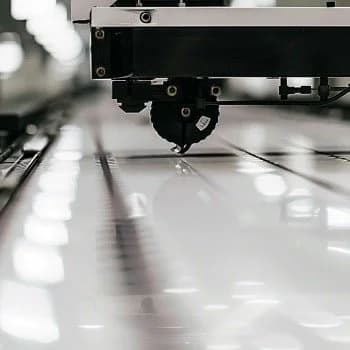
Vinyl plotters remain central to sign production because not every graphic should be printed. Many of the cleanest sign solutions still depend on cut film: window lettering, business hours, frosted privacy bands, reflective graphics, paint masks, and countless other pieces that benefit from crisp vector-cut edges instead of full-color print.
For Sacramento sign work, plotters are often doing some of the most practical production in the shop, even when larger printers and routing tools get more attention.
What a plotter is really doing for a sign shop
A plotter turns vector artwork into cut film accurately and repeatedly. That sounds simple, but it is important because many signs are defined by cut precision rather than image printing. Clean lettering, consistent logo cuts, and reliable masks all depend on that accuracy.
The machine matters because it makes those jobs repeatable. The real value, though, is the class of sign work it enables.
Why plotters still matter in a print-heavy shop
Digital printing handles many jobs well, but it does not eliminate the need for cut vinyl. Some graphics are more elegant, more legible, or more durable when they are built as cut film instead of printed media. Frosted window graphics are a good example. So are simple business-hour decals, suite labels, reflective cut lettering, and masking for painted work.
That is why plotters remain useful even in shops with broad-format printers and UV flatbeds.
Where plotter output is strongest
Plotters are especially useful on:
- Storefront and door lettering
- Frosted and privacy films
- Reflective or specialty films
- Paint masks and stencil-like production aids
- Simple logos and vector-based branding elements
- Layered cut-vinyl compositions
These are all jobs where sharp edges and clean separation matter more than photographic color.
The machine is only part of the workflow
Plotting is just one stage. Weeding, transfer tape, registration, and installation still determine whether the finished piece looks professional. A perfect cut file can still become a poor sign if the vinyl is hard to weed, the transfer method is wrong, or the install is rushed.
That is why plotter skill is never just about pushing cut. It is about understanding the whole cut-vinyl workflow.
Material choice still drives the quality
Different films behave differently under the blade and in the field. Standard lettering vinyl, frosted films, reflective materials, and specialty finishes all bring their own handling and installation issues. So while the plotter provides the cutting accuracy, the material choice still decides how easy the job is to weed, transfer, and install cleanly.
Why this matters for Sacramento storefronts and interiors
Local businesses still rely heavily on the kinds of signs plotters are best at: entry-door information, suite numbers, office privacy graphics, changeable promotional lettering, and directional elements that need to look clean without turning into a full print job. Plotters keep those solutions efficient and precise.
They are one of the quiet reasons many straightforward signs still look better than a more complicated printed version would.
The practical standard
Vinyl plotters matter because they support a type of sign-making that is still extremely useful: clean, precise, cut-vinyl communication. When the material, artwork, and install are handled properly, the result is simple in the best possible way.
If you need cut-vinyl lettering, frosted film, reflective graphics, or other plotter-based sign work in the Sacramento region, start your project. We can help decide when cut vinyl is the right solution and when another production method makes more sense.
FAQ
What is a vinyl plotter best used for?
It is best for cutting self-adhesive films into letters, logos, masks, reflective graphics, frosted films, and other clean vector-based shapes that do not need full-color printing.
Why use a plotter if a shop can already print graphics?
Because many signs are better as cut film than as printed graphics. Plotters give crisp edges, simpler installs in some cases, and access to materials like frosted or reflective vinyl that are often cut rather than printed.
Does a plotter make the whole sign by itself?
No. It creates the cut-vinyl part of the workflow. Weeding, transfer tape, application, and substrate choice still determine the final sign quality.
What sign types depend heavily on plotter work?
Window lettering, door information, suite signs, frosted glass graphics, reflective cut graphics, paint masks, and many temporary or layered vinyl installs all rely heavily on plotter output.