
CNC Sign Fabrication: Letters, Logos, and Panels
CNC machining matters in signage because it brings repeatability to parts that still have to look custom. That is especially useful when a sign needs clean dimensional pieces, accurate mount patterns, or a material stack that leaves little room for guesswork.
Key takeaways
- CNC fabrication is valuable because it makes custom sign parts repeatable, accurate, and easier to integrate into larger installs.
- It is especially strong for dimensional letters, routed sign panels, acrylic parts, templates, and layered sign assemblies.
- The real advantage is not just precision on paper. It is fewer field surprises and more consistent finished parts.
- CNC works best when it is treated as part of the full sign system, including material choice, finishing, and installation.
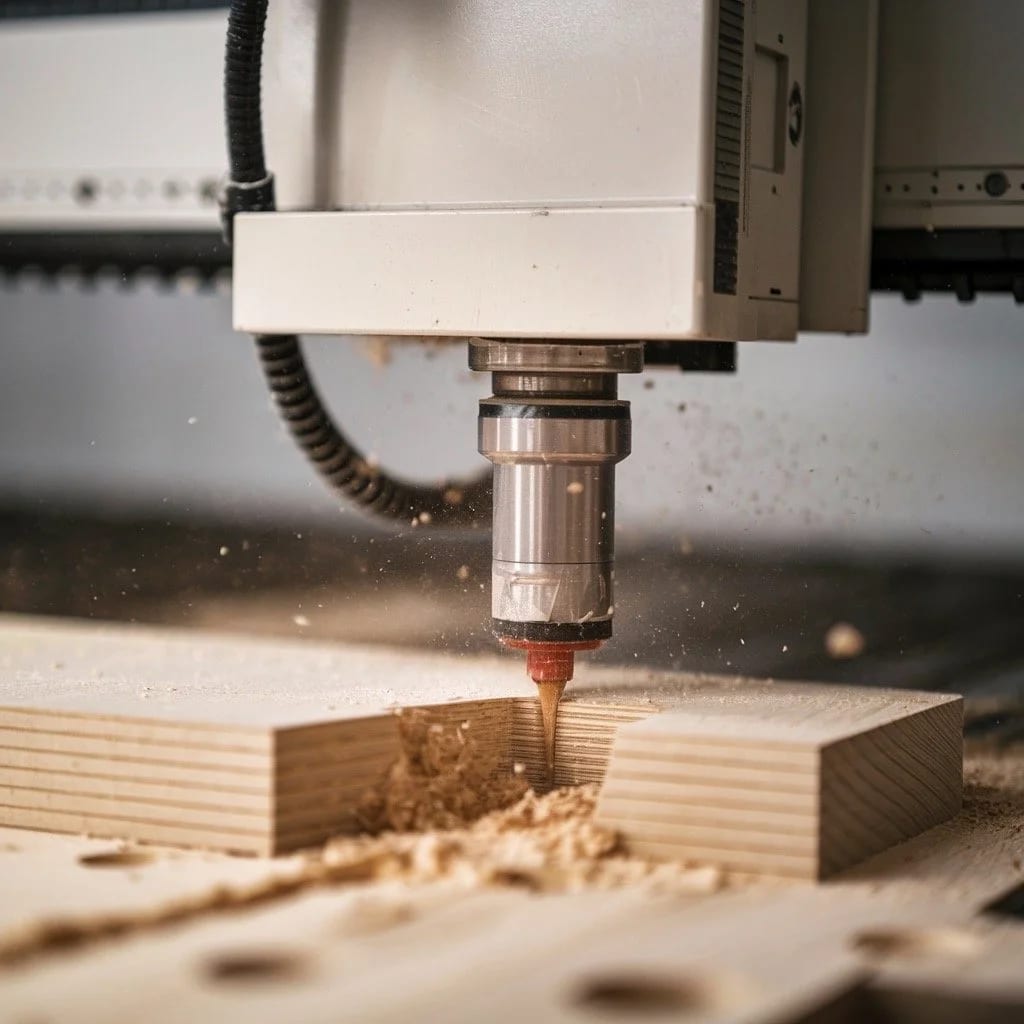
CNC machining changed sign fabrication because it made precision repeatable without making the finished work feel generic. In other words, it gave sign shops a way to produce cleaner custom parts with more predictable outcomes. That matters on everything from dimensional letters and routed panels to hardware templates and layered sign assemblies.
For Sacramento businesses, CNC matters most when the sign needs to look intentional, fit the site correctly, and install without the field crew solving preventable fabrication problems on the wall.
Why CNC matters in sign-making
The biggest value is not that a router follows a file. It is that the file can be used to create accurate, repeatable parts across a whole sign package. If a sign has dimensional letters, a backer panel, stand-off holes, mounting patterns, or replacement parts down the line, CNC helps keep those pieces aligned with each other.
That saves time both in the shop and during installation.
Where CNC adds the most value
CNC is especially useful when a sign involves:
- Dimensional letters and logos that need consistent edges and spacing
- Routed panels with exact cutouts, reveals, or mounting positions
- Acrylic, PVC, ACM, HDU, or wood parts that need repeatable clean shapes
- Hardware templates and drill patterns that help the install go faster
- Multi-layered builds where pieces have to stack or align cleanly
These are the kinds of projects where “close enough” is often not actually close enough.
Precision matters most when it prevents field issues
On paper, CNC sounds like a technology story. In practice, it is often an installation story. Accurate parts mean fewer surprises when the sign reaches the wall. Mount holes line up. Patterns fit. Panel edges behave the way the installer expects. Replacement parts can be produced without guessing at old dimensions.
That is the real operational value for a local sign shop and for the client paying for the job.
Material choice still drives the process
CNC does not flatten out the differences between materials. Acrylic, aluminum composite, PVC, HDU, and wood all behave differently under the tool. Some care more about chip control. Some care more about tear-out or heat. Some need more downstream finishing than others.
A custom sign fabrication plan still has to pair the right tooling and finish strategy with the material if the CNC work is going to look finished instead of merely accurate.
CNC helps custom signs stay custom at scale
One of the best things about CNC is that it allows a project to stay design-specific while still being repeatable. That is helpful for multi-location businesses, tenant sign packages, and anything that may need future additions or replacements without reinventing the fabrication each time.
It is also helpful on one-off projects where the design includes details that would be slow or inconsistent to execute manually.
What CNC does not replace
CNC is not the whole job. It does not replace thoughtful layout, coating decisions, assembly, hardware planning, or installation judgment. A beautifully routed piece can still become a mediocre sign if the finish is weak or the install ignores the site.
That is why the best CNC-driven sign work still looks like craftsmanship. The machine improves the parts, but the sign still needs human decisions all the way through.
Why this matters for Sacramento projects
Locally, many signs live in business parks, retail centers, office interiors, clinics, and public-facing environments where fit and finish are read up close. These are not forgiving settings. Panel alignment, edge quality, and hardware consistency show immediately.
That is exactly where CNC brings the most practical value: it helps the shop produce parts that belong in those environments rather than barely functioning within them.
The practical standard
CNC machining is most valuable when it makes the sign easier to fabricate correctly, easier to install cleanly, and easier to reproduce or repair later. That is why it remains central to modern custom signage, especially for projects that involve layered fabrication or dimensional work.
If you need routed signs, dimensional letters, or CNC-fabricated sign parts for a Sacramento business, start your project. We can help decide which materials and fabrication methods make the most sense before the design turns into costly production guesswork.
FAQ
What kinds of signs benefit most from CNC machining?
Dimensional letters, routed sign panels, acrylic and PVC parts, templates, donor walls, directories, and any project that depends on accurate repeatable pieces all benefit from CNC production.
Why is CNC better than purely manual fabrication for many sign projects?
Because it improves repeatability and consistency, especially when multiple parts need to align, mount the same way, or be reproduced later. Manual skill still matters, but CNC removes a lot of avoidable variation.
Does CNC replace finishing and craftsmanship?
No. It produces cleaner parts and better repeatability, but those parts still need thoughtful finishing, assembly, and installation to become a polished sign.
Is CNC only useful for complex signs?
No. It is also useful on straightforward projects when repeatability, edge quality, or accurate hole placement matter enough to justify a more controlled fabrication process.