
When to Use Stencils for Painted Signs
Stencils are not a shortcut for bad design. They are a production tool that helps Sacramento sign projects stay cleaner, faster, and more consistent when freehand alone is not the smartest approach.
Key takeaways
- Stencils are most valuable when a sign package needs repeatability and cleaner production, not just easier painting.
- They work especially well for doors, windows, directional systems, suite IDs, and other repeat-mark applications.
- The surface still controls the result; rough texture and rushed paint application will defeat even a good stencil.
- The best stencil systems are designed around the site, the sign method, and the pace of installation.
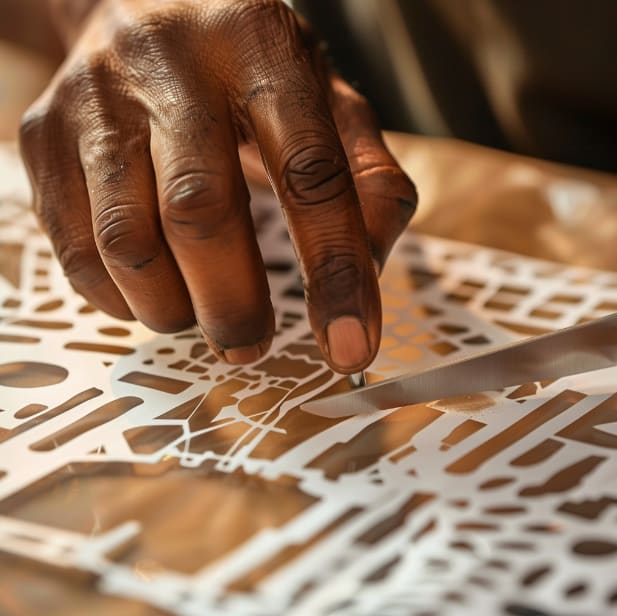
Stencils are valuable because they remove uncertainty from sign production. When a project needs repeatability, edge control, or cleaner execution across several surfaces, a stencil can keep the work disciplined without stripping all the character out of the sign.
That makes them especially useful in Sacramento commercial work where branding has to stay consistent across storefronts, offices, corridors, or repeated tenant elements.
What problems do stencils actually solve?
They solve production problems more than artistic ones.
- Consistency: repeated business names, suite IDs, and directional graphics stay aligned
- Speed: the painter is not redrawing the same mark every time
- Cleaner execution: especially where spacing and placement have to stay tight
- Repeat use: useful when a project includes multiple doors, panels, or field applications
Where do they help most in real projects?
Stencils are often the right move for:
- window hours and door lettering
- suite numbers and office directories
- parking-area or back-of-house markings
- wayfinding systems that repeat the same elements
- interior projects where several rooms need matched typography
That is why they show up so often in tenant improvements, school spaces, churches, and mixed-use commercial properties around the Sacramento region.
What makes a stencil job look professional?
Not the stencil alone. Professional results come from the combination of:
- good layout and spacing
- clean, appropriate surfaces
- light, controlled paint application
- the right stencil material for the substrate
A beautifully cut stencil can still produce a bad sign if the wall is rough, the paint is too heavy, or the design was never suited for stencil use in the first place.
When is a stencil not the best answer?
Some projects benefit more from freehand work, especially when the sign needs a softer human rhythm, custom flourish, or painterly imperfections. Stencils are strongest when control matters most. Freehand is stronger when expression matters more.
Many of the best sign packages use both: stencil structure where repetition matters, hand-painted detail where character matters.
Use stencils as part of a system
If a Sacramento sign project includes multiple surfaces, several matching graphics, or access windows that leave little room for error, a stencil system can be the difference between clean execution and expensive rework.
If you need stencil-based sign production for a storefront, office, or wayfinding package, contact Sactown Signco. We can help choose the right stencil approach, sign method, and installation sequence for the project instead of forcing one technique onto everything.
FAQ
Why use a stencil if a sign can be painted by hand?
Because some projects need repeatable placement, cleaner production, or faster execution across multiple surfaces. Stencils help keep systems consistent when the same mark appears more than once.
What kinds of sign projects benefit most from stencils?
Storefront windows, suite numbers, directional systems, parking-area markings, and repeated logo or text applications are all strong stencil use cases.
Can stencils still look custom?
Yes. A stencil is just a production method. The design can still feel highly custom if the typography, spacing, materials, and placement are handled well.
Are stencils good on rough surfaces?
They can work, but the finish will not be as crisp as it is on smooth surfaces. Rough walls and masonry require different expectations and more careful paint control.