
CNC Router Bits for Dimensional Sign Letters
Router bits are not interchangeable sign-shop trivia. They change edge quality, chip control, cleanup time, and whether a letter set comes off the table looking production-ready or half-finished.
Key takeaways
- Router-bit choice should start with the material and the finish you need, not with whatever bit is already loaded.
- Acrylic, PVC, ACM, wood, and HDU all reward different bit behavior and chip-clearance strategies.
- The wrong bit can still cut the shape, but it usually creates extra sanding, rougher edges, or cleaner-up costs later.
- In sign production, bit choice and toolpath planning are part of finish quality, not just part of machining.
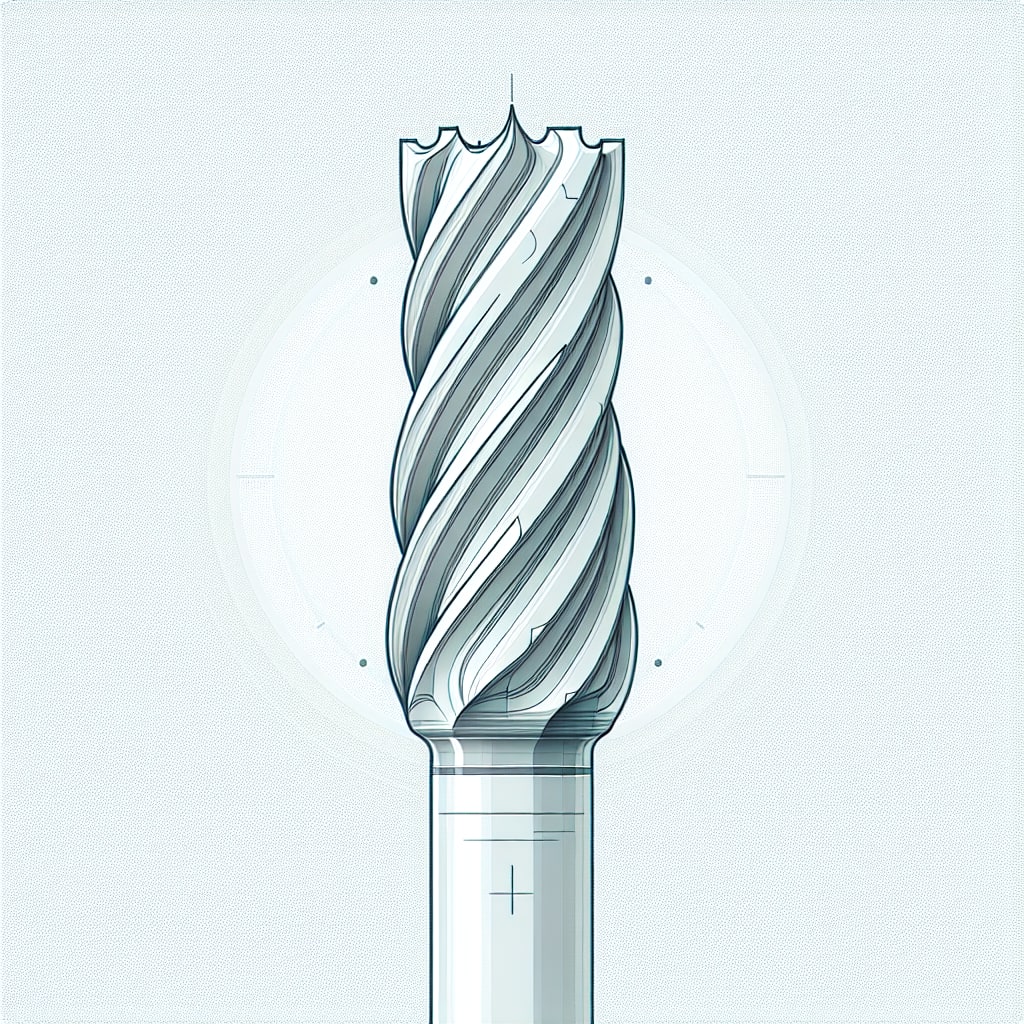
In sign fabrication, router bits are easy to treat like a shop-detail problem until the finish comes off the table rough, melted, chipped, or full of cleanup work. That is when it becomes obvious that tooling decisions are part of sign quality, not separate from it.
For Sacramento sign work, bit selection matters on dimensional letters, routed panels, templates, acrylic signs, ACM, HDU, PVC, and wood builds. The right bit saves time. The wrong bit can still make the part, but it often makes the part badly.
Start with the material, not the machine
Different substrates want different cutting behavior. Acrylic needs clean chip evacuation and heat control. Wood reacts to grain and tear-out. ACM and PVC have their own edge behaviors and tolerance for heat. HDU is forgiving in some ways and messy in others.
That means the first question is not “What bit do we usually use?” It is “What does this material need if we want the face and edge to look right with minimal rescue work?”
Bit geometry changes the finish
Two bits can cut the same file and leave very different results. Some are better at clearing chips. Some are better at keeping the top face cleaner. Some are better at delivering sharp interior detail. Others are meant to smooth contours or create chamfers.
That is why a good sign shop usually thinks in categories: profile bits, acrylic-friendly bits, compression bits for panel work, V-bits for detail, and specialty tools for specific finishes.
Acrylic and plastics need different discipline than wood
With acrylic, the danger is often heat and edge quality. A bit that works fine on wood can leave acrylic cloudy, welded, or chipped. That is why tool shape, feed behavior, and cut strategy matter so much more than people expect.
On wood and HDU, the conversation changes. Tear-out, fuzzing, grain direction, and how paint-ready the routed edge feels become more important than the anti-melt concerns you have with acrylic.
Panel work is often about both faces, not just the cut line
Many sign substrates are panel-based, which means edge quality has to be considered alongside the condition of the visible faces. If both faces matter, the tool choice may need to protect both sides of the material rather than only prioritizing speed.
That is one reason panel-production bits and dimensional-letter bits are not always chosen for the same reasons.
Toolpath planning and bit choice are linked
A great bit can still underperform if the toolpath is careless. Entry style, pass depth, hold-down method, and finishing strategy all affect what the bit can actually deliver. In sign work, that means router-bit selection is never fully separate from the cut plan.
The cleaner shops treat the bit, the material, and the toolpath as one decision.
Where finish quality shows up fastest
Dimensional letters and exposed-edge panel signs reveal tooling choices quickly. A rough routed edge may be hidden on some temporary pieces, but it becomes obvious on lobby logos, acrylic letters, painted routed signs, and layered dimensional work. That is why many production problems should be solved at the machine rather than fixed by hand afterward.
If the part needs to look precise, the bit choice has to support that outcome before the spindle starts.
What this means for Sacramento sign projects
Locally, a lot of work lands in environments where close-range viewing is normal: office lobbies, suite entries, clinic interiors, retail counters, and branded architectural panels. Those are not forgiving environments. Tool marks and edge defects do not disappear there.
That is why tooling discipline matters. It shortens cleanup, improves repeatability, and helps the finished sign read as professional instead of shop-made in the wrong way.
The practical standard
Router-bit selection is really finish planning. The best bit is the one that matches the material, the edge expectation, and the post-production work you are trying to avoid. That is what keeps routed sign parts efficient, repeatable, and visually clean.
If you are planning dimensional letters, routed panels, or CNC-fabricated signs for a Sacramento business, start your project. We can help match the material, cut method, and finish expectation before the part gets routed with the wrong assumptions baked in.
FAQ
What router bit matters most for sign work?
There is no single best bit for every sign. O-flute bits are common for acrylic and some plastics, compression bits are useful when both faces need cleaner panel edges, and V-bits or specialty bits may be better for carved detail or chamfer work.
Why do routed sign edges look rough sometimes?
Usually because the bit geometry, feed strategy, or material support did not match the substrate. Edge quality is often a tooling problem long before it becomes a sanding problem.
Do sign shops use different bits for acrylic and wood?
Yes. Those materials behave very differently, so they often call for different cutting strategies and different bit shapes if you want clean, predictable results.
Can the wrong bit ruin a sign job even if the shape is technically correct?
Absolutely. You may still get the outline, but the finish can be poor enough to create visible quality issues or slow the job down with unnecessary cleanup.