
Making Custom Stencils for Sign Painting
Custom stencils are most useful when a sign needs repeatability, alignment, and cleaner production than freehand lettering alone can provide. Here is how Sacramento sign projects should approach stencil design and use.
Key takeaways
- Custom stencils are strongest when the same mark needs to repeat cleanly across doors, windows, panels, or multi-unit spaces.
- Mylar and adhesive-backed stencil options solve different problems; one is not automatically better for every surface.
- Bridge placement, spacing, and overall stencil structure should be designed around readability, not just the logo file.
- Clean surfaces, light paint passes, and edge control matter more than the cutting tool alone.
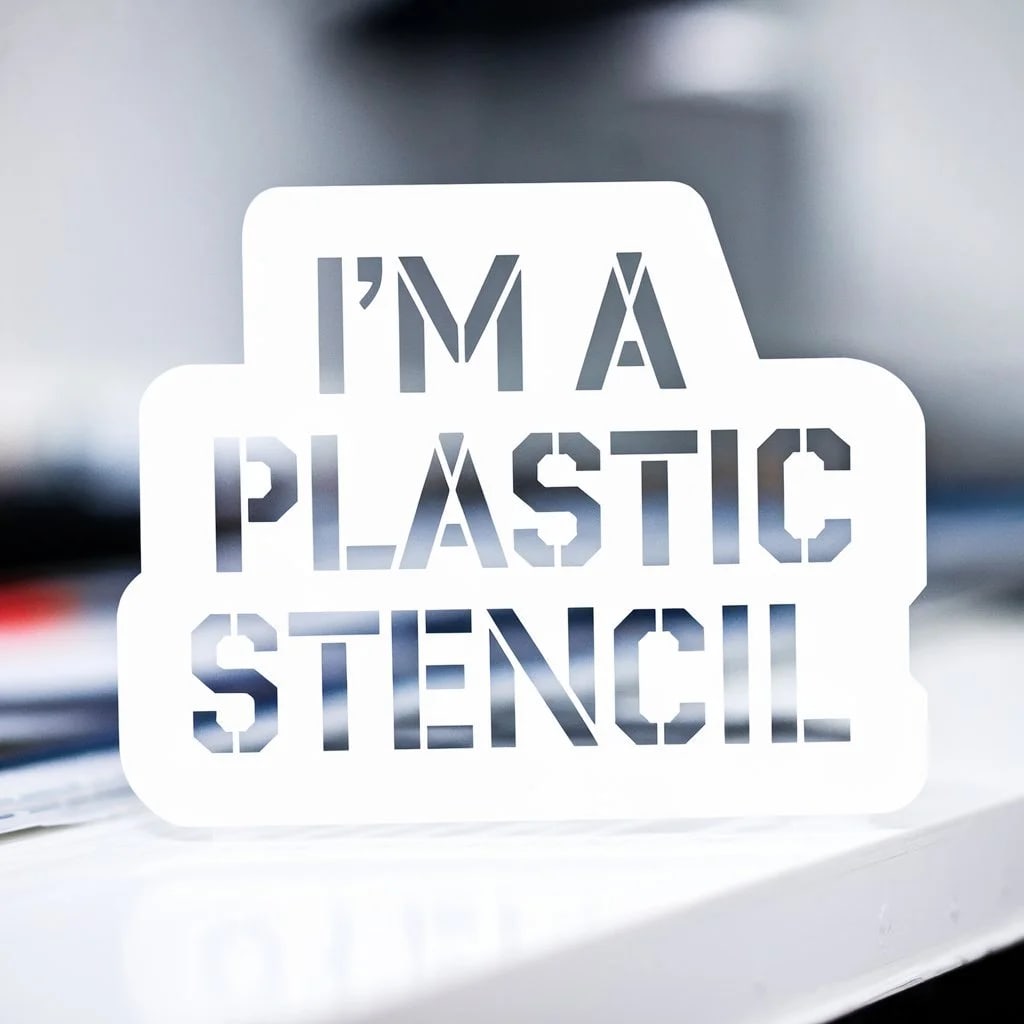
Custom stencils matter when a sign project needs repeatability. That might mean matching a business name across several doors, applying the same mark to multiple suites, keeping painted lettering consistent through a remodel, or building a directional system that has to look clean from panel to panel.
In those cases, stencils are less about decoration and more about process control.
When do custom stencils make the most sense?
They are usually the right tool when a sign needs one or more of these qualities:
- repeatable placement
- consistent letter shapes across multiple signs
- faster production on a recurring design
- cleaner layout on surfaces where freehand correction would be costly
That makes them especially useful on Sacramento-area suite signage, directional packages, window hours, parking-area marking work, and interior wayfinding systems.
How should you design a stencil for real sign use?
Good stencil design is not just about tracing a logo. It requires thinking through bridges, stroke thickness, viewing distance, and the surface receiving the paint.
Letters like A, O, B, and R need bridges that hold the stencil together, but those bridges also need to be placed so the finished mark still reads cleanly from the intended distance. A stencil that looks fine on a cutting screen can still fail once it is painted above a storefront or on textured block.
What stencil material should you choose?
Material choice should follow the application.
- Reusable Mylar: strong general-purpose option for repeated painted applications
- Adhesive-backed stencil materials: better when edge control and placement accuracy matter most
- Heavier-duty options: useful for rougher field conditions or repeated industrial use
The right answer depends on whether you are painting one feature wall, a set of tenant doors, or a repeated field-marking system.
How do you keep stencils from bleeding?
Most bleed problems come from too much paint, poor contact with the surface, or a substrate that is rougher than the method can handle.
- clean the surface thoroughly
- make sure the stencil sits flat where it needs to
- apply light passes instead of flooding the openings
- match the paint method to the substrate
Glass, smooth panels, and well-prepped walls are much easier to keep crisp than brick or deep texture.
How do stencils fit into Sacramento sign work specifically?
They are especially useful in projects where consistency matters across a larger site or where property expectations are tight. Shopping-center suites, office corridors, schools, churches, and mixed-use properties all benefit from cleaner repetition.
They also help when a sign package needs to be executed quickly without losing layout discipline across multiple pieces.
When is freehand still better?
Freehand painting still wins when a sign needs more personality, custom rhythm, or painterly variation than a stencil can provide. Many of the best commercial sign packages use both methods: stencils for repeated structural elements and hand lettering for the more expressive pieces.
Use stencils to control quality, not to flatten the design
Custom stencils are at their best when they make a project more consistent, more efficient, and easier to execute cleanly. They should support the sign’s quality, not make everything feel generic.
If you are planning a Sacramento sign package that needs repeated painted elements, start your project. We can help decide when a stencil system makes sense, what material fits the job, and how to keep the finished sign looking intentional instead of over-mechanized.
FAQ
When should I use a custom stencil instead of freehand painting?
Use a custom stencil when the design needs repeatability, tighter alignment, or clean reproduction across multiple surfaces. It is especially useful for business names, suite numbers, hours, directional systems, and repeated logo applications.
What stencil material works best for sign projects?
Reusable Mylar works well for many painted sign applications, while adhesive-backed stencil materials are better when edge sealing and exact placement are more important than reuse.
How do I prevent paint bleed on a stencil?
The biggest keys are a clean surface, a stencil that sits tight to the substrate, and light paint application. Most bleed comes from too much paint or poor contact, not from the stencil shape alone.
Can custom stencils work on textured surfaces?
Yes, but expectations have to change. Rough walls, brick, and heavily textured surfaces are harder to keep perfectly crisp, so the stencil method and design need to account for that.